









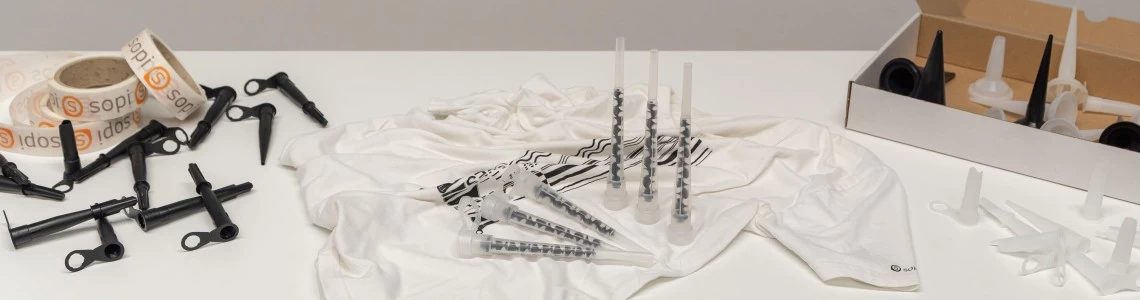
Static Mixer Nozzles for High-Precision Bonding
Static mixer nozzles are crucial tools for ensuring precise and efficient material mixing. They operate without moving parts, relying on the fluid engineering and pressure of the substances. This seemingly simple piece of equipment has a substantial influence on the quality and consistency of the end products. Engineers apply various methods to ensure that mixing nozzles perform consistently and have longevity. Fluid engineering turns complex flow behavior into predictable, controllable, and repeatable processes.
For optimal performance, it is critical to choose the best nozzle manufacturer. Doing that requires a clear awareness of operational goals, material characteristics, and equipment compatibility. It should also involve evaluating a broad range of factors, including manufacturing capabilities, material selection, quality control, and customer support.
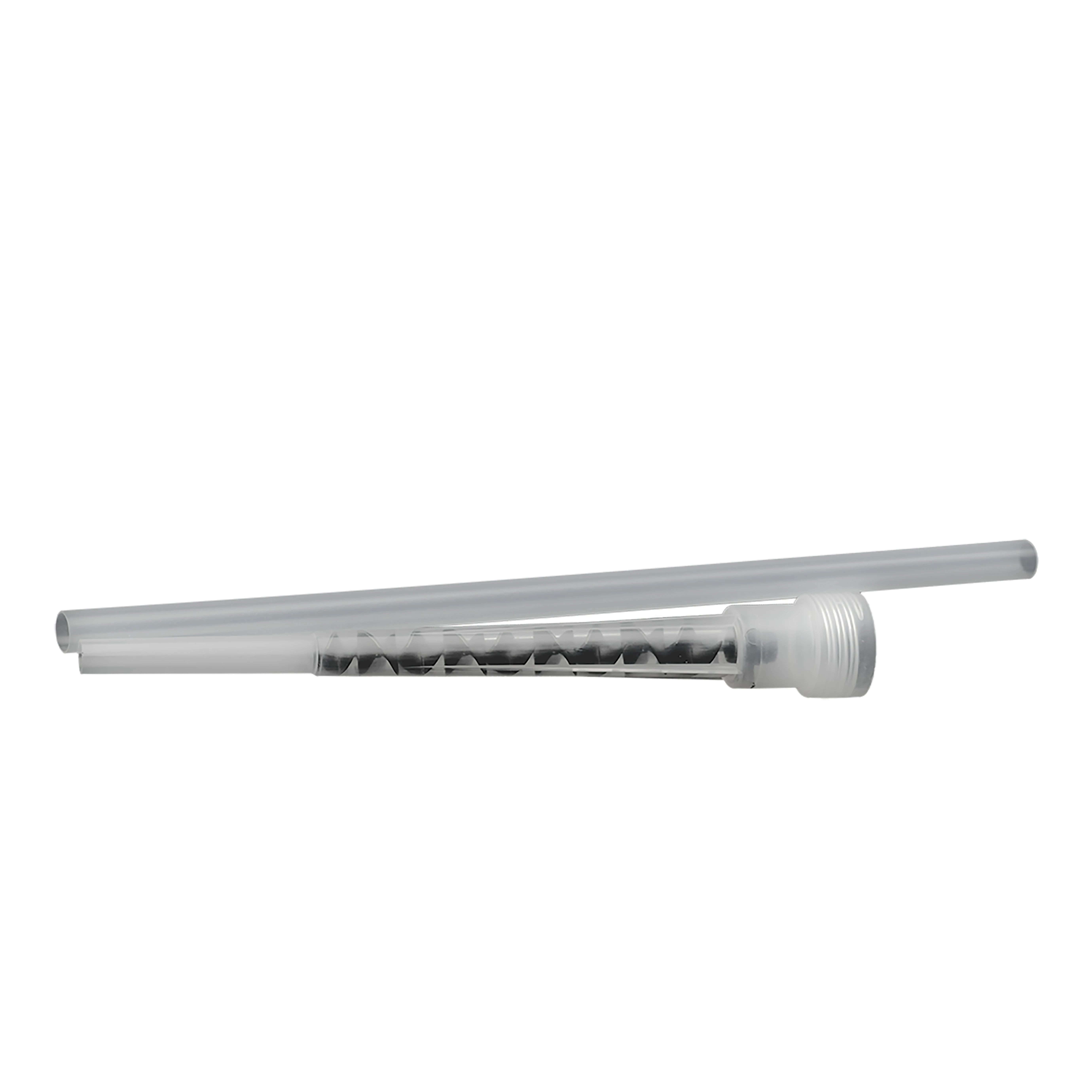
Mixing Nozzles for Multiple Viscosities and Densities
Static mixer nozzles are unique components used for the blending of various substances. They are used in solution-mixing applications where they rely on the flow of materials to combine them effectively. The solvent, adhesive, or other liquids flow through the strategically designed internal structures, where they split, recombine, and redirect. The joining elements split the liquid into smaller streams that break apart and rejoin, creating gentle turbulence. The internal components guarantee the process is continuous and uniform.
There are several types of mixing nozzles, each designed for a specific task. They are part of numerous industries, including food and beverage, oil and gas, water treatment, chemical processing, and pharmaceutical. Because they blend materials without external energy, they are energy-efficient and require minimal maintenance. The nozzles are made from high-quality materials and feature a compact design that ensures uniform and consistent mixing.
The Best Nozzle Manufacturer Uses Fluid Engineering to Create Consistent, Reliable Nozzles
Mixing nozzles are designed using fluid engineering, which focuses on the behavior of liquids as they move through systems. It combines mathematics, engineering design, physics, and material science. In fluid mechanics, engineers evaluate energy dissipation, resistance, deformation, and flow under stress. To ensure that two reactive solutions merge into a homogeneous mixture, the nozzles must control the flow. There are three different flow types:
- Laminar flow (low velocities with high viscosity materials)
- Turbulent flow (higher velocities with low viscosity materials)
- Transitional flow (between the conditions stated above)
Engineers use flow information to understand the interaction between flow and element geometry and to choose internal structures that provide consistent, reliable blending. They analyze how viscosity changes and how materials accelerate through narrowing channels, how velocity develops across cross sections, and how layers affect mixing. As a static mixer nozzles supplier, we deliver tailored solutions by fine-tuning pressure, matching equipment, and upholding strict quality standards. That allows us to design tools that fit the application perfectly.
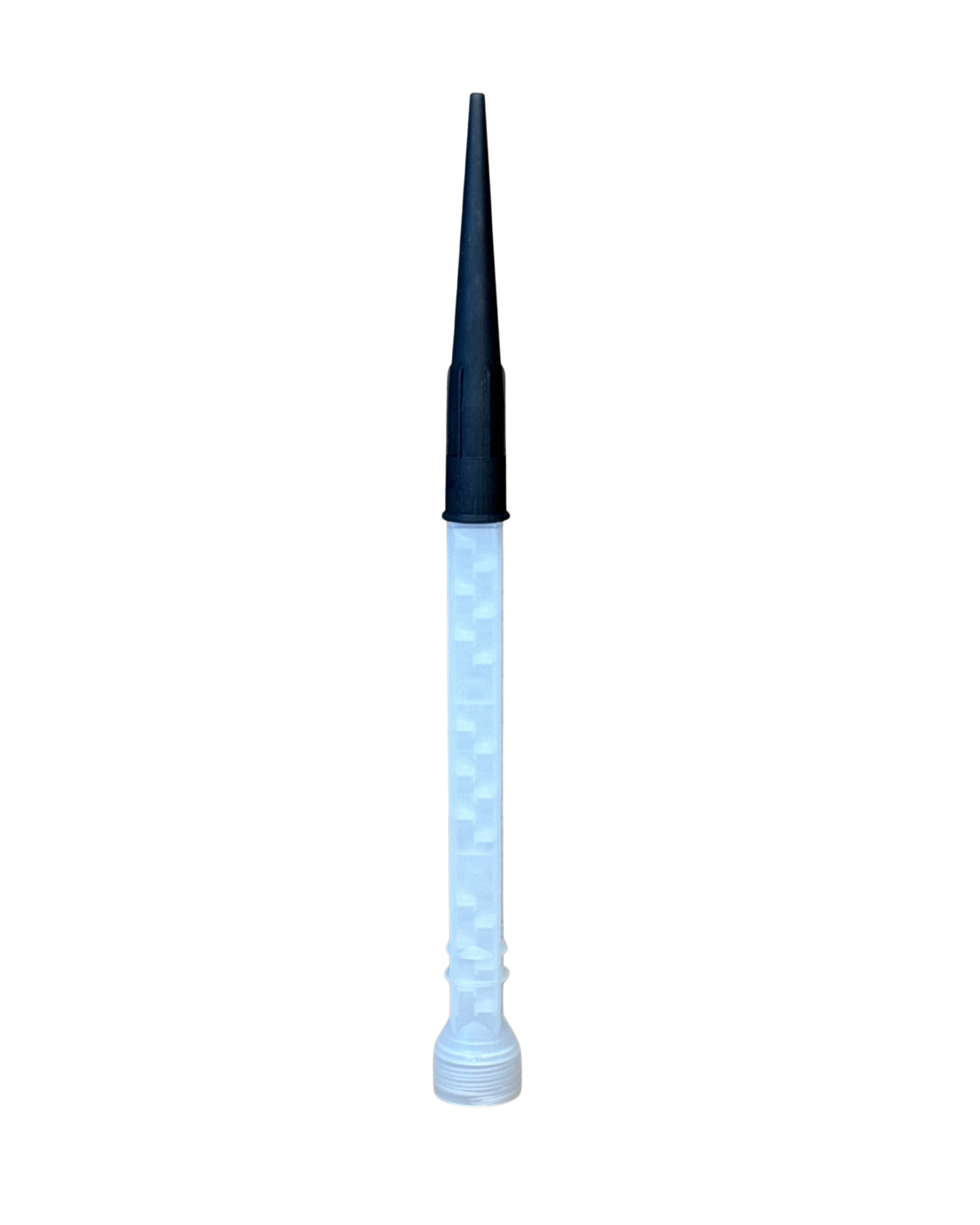
How to Choose the Correct Mixer Nozzle
Static mixer nozzles are chosen for their ability to optimize material performance, ensure reliable applications, and support operator effectiveness. The latter often relies on highly controlled joining, so it is paramount to pick a tool that strengthens joint integrity, reduces waste, and improves final product quality.
When selecting nozzles, start by assessing the materials you are working with. They influence the speed and intensity of the interaction between the two components and the process’s sensitivity. It is also necessary to prioritize ratio accuracy and metering compatibility, as the ratio protects formula performance.
Choosing the correct internal geometry determines the blending intensity, while assessing the length greatly impacts blending efficiency. The inlet connection type should match the cartridge, and the flow rate should match the task. As a nozzle manufacturer, we recommend considering the formulation’s shear sensitivity, curing speed, and environmental conditions. Select a tool perfectly balancing waste, cost, and performance.
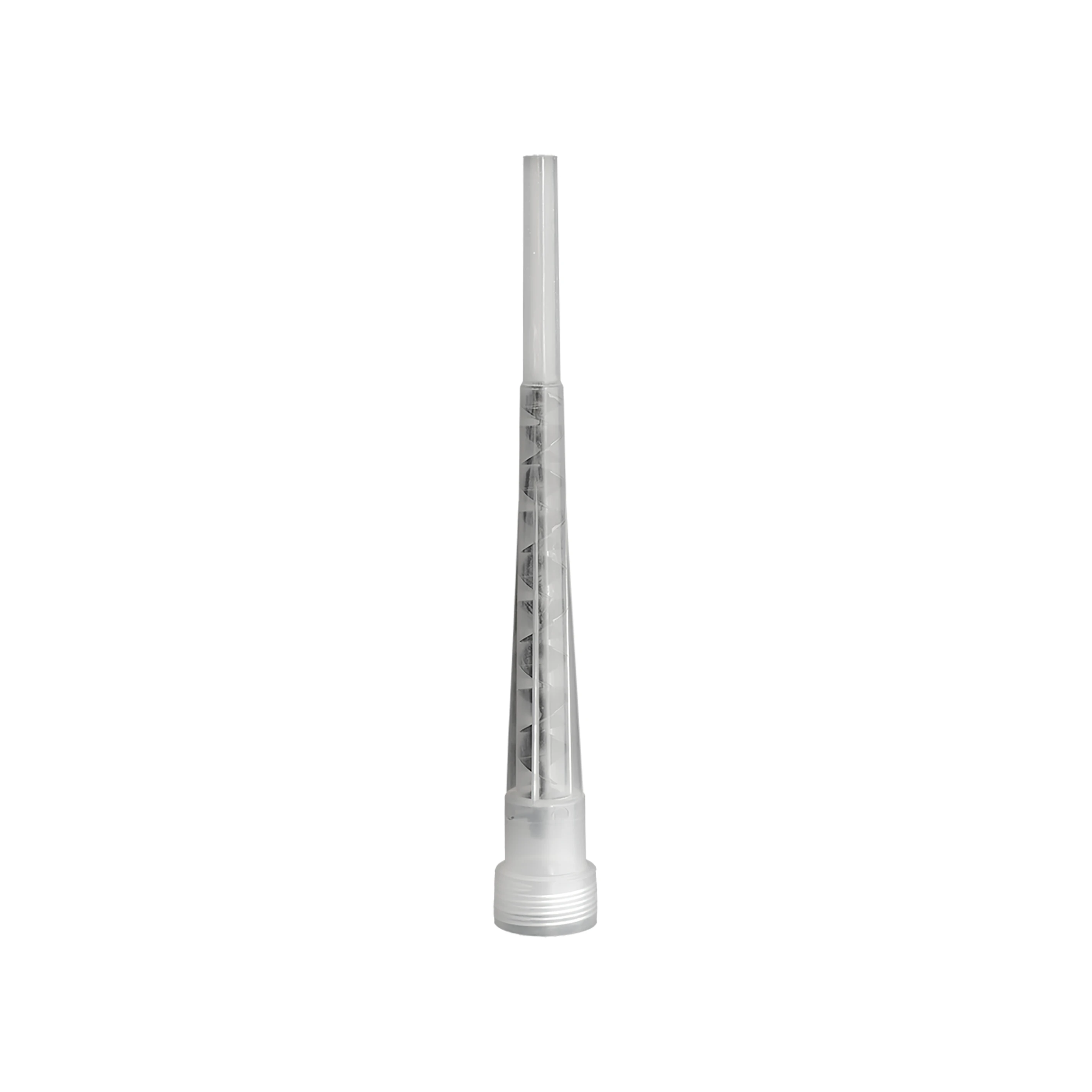
10 Things to Consider When Choosing a Nozzle Manufacturer
Static mixer nozzles suppliers guarantee that the equipment is engineered and produced to the highest standards. The choice requires a thorough evaluation and consideration of several factors. These differ depending on the user and their preferences. When picking a manufacturer, you should consider:
- Quality of the nozzles
- Design and manufacturing capabilities (production volume, lead time, molding technologies, automation)
- Customization
- Technical and industrial expertise
- Material selection (durability, cost, availability)
- Cost
- Customer support
- Sustainability practices
- Reputation
- Technological advancements and innovation
By assessing these factors, you will find a dependable partner who maintains your competitiveness and helps achieve your long-term goals.
Mixing Nozzles Supplier Improves Applications by Fixing Design Issues
Static mixer nozzles are essential tools for dispensing sealants and other viscous materials with precision. To guarantee optimal application, you need the right design. Many standard-issued nozzles have design flaws ranging from material strength to longevity. The most common design flaws are inconsistent flow control, difficulty in reaching tight spaces, poor durability, weak construction, clogging, material build-up, and incompatibility. As a manufacturer, we identify issues and implement targeted solutions that significantly improve performance and lifespan.
Nozzles offer simple, powerful advantages for consistent blending applications. Partnering with a reputable nozzle manufacturer helps ensure safety, reliability, and long-term performance. As industries demand greater precision, picking well-designed tools supports better results and sustainable operations.